
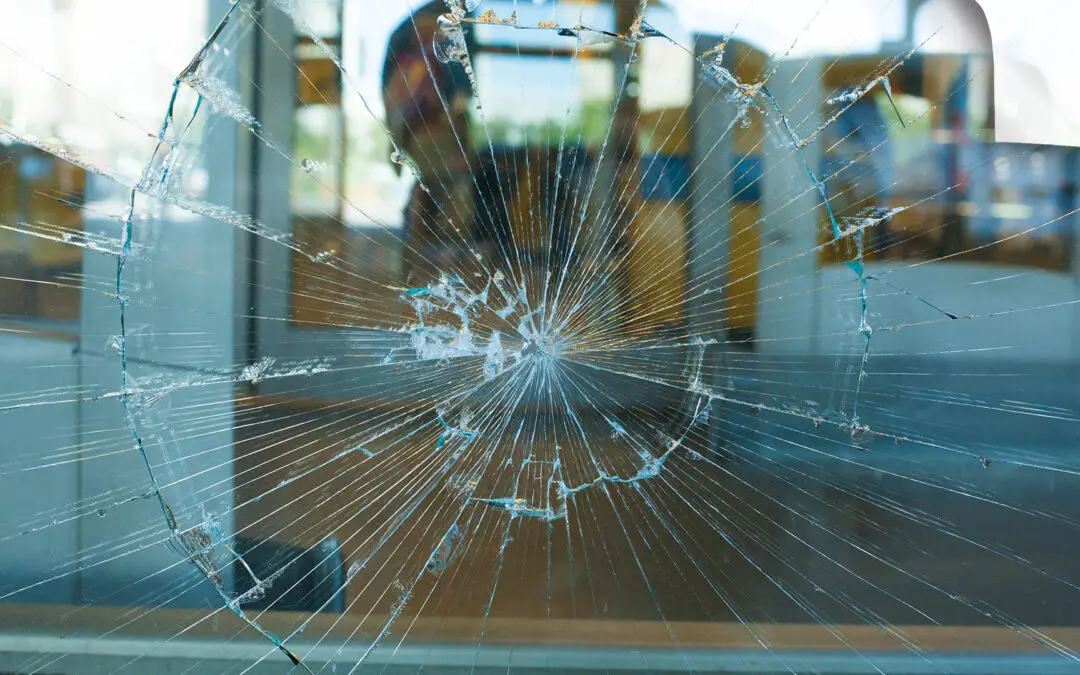
If you’ve got large windows, glass doors, or storefront glass, it’s worth wondering how much protection that glass actually provides. Standard glass can break quickly under impact, and once it’s broken, that opening can turn into a real safety or security problem.
That’s where shatter-resistant window film comes in. It can be worth it when your goal is to help hold broken glass together, reduce flying glass, and make forced entry more difficult. It won’t make glass unbreakable, and it shouldn’t be treated as a complete security solution on its own. But in the right setting, it’s a practical upgrade for homes, businesses, schools, and public-facing facilities.
Here’s what it actually does, what it doesn’t do, and when it’s worth considering for your building.
What Is Shatter-Resistant Window Film?
Shatter-resistant window film is a clear or lightly tinted film applied to existing glass to help hold broken pieces together after impact. The glass can still crack or break, but the film keeps the broken pieces attached instead of letting them scatter immediately.
You might also hear this called safety and security film. That name fits because the film genuinely supports both goals at once. On the safety side, it reduces flying glass if a window or door breaks. On the security side, it makes the glass harder to clear away quickly during a forced-entry attempt.
How Does Shatter-Resistant Window Film Work?
The film bonds directly to the surface of the glass. If the glass gets hit and breaks, the film helps hold the cracked pieces together rather than letting them fall apart.
Think of it like a backing layer. The glass can still fracture, but the film keeps the pieces connected, which reduces loose shards and makes it harder for someone to quickly punch through and create an open hole.
How well it performs depends on a few things: the type of glass, the thickness and quality of the film, the size of the window or door, the condition of the frame, the quality of the installation, and whether the film is attached only to the glass or integrated with the frame system.
That last point matters more than people expect. Film applied to glass can hold broken pieces together, but the full window or door system still needs to be considered. A weak frame, poor locks, or already-damaged glass can limit how much value the film actually adds.
When Is Shatter-Resistant Window Film Worth It?
Shatter-resistant film is usually worth considering when you want a practical safety upgrade without replacing the full glass system. It tends to be a good fit for properties with large exposed windows, glass entry doors, storefronts, schools, offices, churches, healthcare facilities, and homes with vulnerable glass areas.
Here’s a simple way to think it through:
| Situation | Is It Worth Considering? |
| Storefront with large glass panes | Often yes |
| School or public-facing building | Often worth evaluating |
| Home with exposed glass doors | May be useful |
| Office or church with large windows | May be useful |
| High-security facility | May need stronger glass |
| Damaged or outdated glass | Replacement may be better |
The key is keeping expectations realistic. It’s meant to help glass perform better after breakage, not turn regular glass into bullet-resistant glass. That makes it a smart option when your goal is reducing hazards, slowing entry, or improving safety without a full glass replacement.
What Shatter-Resistant Film Can Help With
Shatter-resistant film offers several practical benefits depending on your building and glass type.
It Can Help Hold Broken Glass Together
This is the main benefit. When glass breaks, the film keeps the pieces attached instead of letting them fall apart right away, which reduces loose glass and keeps the opening more contained after impact.
It Can Help Reduce Flying Glass
Broken glass creates a real safety hazard, especially in schools, offices, retail spaces, and other areas where people are nearby. Shatter-resistant film reduces how much glass scatters after impact, which matters in public-facing buildings, entry areas, and spaces with large windows.
It Can Make Forced Entry More Difficult
Shatter-resistant film can slow forced entry because the glass becomes harder to clear away quickly once it breaks. That delay matters more than it might sound like it does. In a lot of security situations, slowing someone down is the actual goal, not stopping them outright.
That said, this isn’t a break-in prevention product. It works best as part of a broader plan that includes stronger locks, better frames, lighting, alarms, access control, or upgraded glass where it’s actually needed.
It Can Preserve Visibility
A lot of property owners consider film specifically because it adds protection while keeping the glass clear. For storefronts, offices, schools, and commercial buildings, visibility often matters just as much as safety. You can get natural light, open sightlines, and a professional appearance while still improving your glass’s performance after impact.
It May Offer Other Film Benefits
Depending on the product, window film can also help with privacy, glare, UV exposure, or heat control. Not every shatter-resistant film is built for all of these, so the right film type depends on your actual goal. If security is the main concern, make sure the film is selected for that purpose specifically, not just for tint or appearance.
What Shatter-Resistant Film Cannot Do
Film can genuinely help, but it has real limits, and understanding those limits is what actually tells you whether it’s worth it for your building.
It Does Not Make Glass Unbreakable
The glass can still crack or break under enough force. The film’s job isn’t to prevent damage, it’s to help the glass hold together better once it’s already broken.
It Does Not Guarantee Break-In Prevention
As covered above, film can slow forced entry, but it doesn’t guarantee someone can’t get through. Security depends on the full opening, the glass, the frame, the locks, the door hardware, and the surrounding structure, not just the film.
It Does Not Replace Bullet-Resistant Glass
Security film and bullet-resistant glass are different products solving different problems. Bullet-resistant glass systems use specific layers and materials built for a much higher level of protection. Shatter-resistant film is a surface-applied upgrade that helps existing glass perform better after impact, but it does not provide the same level of protection. If your building has higher-risk security needs, bullet-resistant glass is probably the better fit.
It Does Not Fix Damaged or Weak Glass
If the glass is already cracked, failed, fogged, loose, or poorly framed, film probably isn’t the right first move. In those cases, glass replacement or a stronger glazing system needs to happen before film makes any real sense.
When a Stronger Glass Solution May Be Better
Shatter-resistant film can be a smart option, but it’s not always the right one. A stronger glass solution probably makes more sense if the existing glass is damaged or outdated, the frame is weak or in poor condition, the building has higher security concerns, the opening needs more impact resistance than film provides, or the glass is part of a critical entrance or transaction area.
For example, a storefront with glass in good shape might benefit from film if the goal is reducing shattering or slowing entry. A school entrance, transaction window, or security-sensitive facility usually needs a more advanced glass system instead. The right answer depends on the building, the glass, and the actual goal, and that’s not always obvious from the outside.
When to Get a Professional Evaluation
That’s exactly what a professional evaluation sorts out. It typically looks at the existing glass type, the size and location of your windows or doors, frame condition, building use, visibility needs, safety concerns, and security goals, then helps determine whether film or replacement actually makes more sense.
This matters especially for businesses, schools, healthcare facilities, churches, and public-facing commercial buildings, spaces that need glass supporting both function and safety at the same time.
Businesses, schools, property managers, and homeowners in Columbia, Jefferson City, Lake of the Ozarks, and surrounding Mid-Missouri communities can work with Columbia Glass & Mirror to evaluate the right glass or window film option for their space.
Contact Columbia Glass & Mirror at (573) 874-6985 to schedule a consultation.
Frequently Asked Questions
Does shatter-resistant film work?
Yes, when it’s used for the right purpose and installed properly. It helps hold broken glass together, reduces flying glass, and makes forced entry more difficult. It doesn’t make glass unbreakable.
What is the difference between shatterproof and shatter-resistant?
“Shatterproof” implies the glass can’t break, which isn’t accurate in real-world conditions. “Shatter-resistant” is the more honest term: the glass can still crack or break, but the film helps hold the broken pieces together.
Is there a film for windows that helps prevent breakage?
Some films are designed to help glass resist shattering and stay together after impact, but none prevent all breakage. The main role is managing what happens after the glass cracks, not stopping the crack from happening.
Does shatterproof window film stop break-ins?
It can slow forced entry, but it shouldn’t be relied on to stop break-ins outright. It works best as one part of a broader security plan that includes locks, frames, alarms, lighting, and stronger glass where needed.
What are the drawbacks of window film?
It’s not enough for every security concern, and how well it performs depends on the glass type, film type, installation quality, and frame condition. In some cases, stronger glass or full replacement is the better option.
-
How To Decide Between a Framed or Frameless Mirror
Are framed or unframed mirrors best for your home? Learn about the key differences between these ...
-
Six Signs Your Windows Need Replacement
Discover the top signs you need window replacement with expert tips from Columbia Glass & Mirror,...
-
What’s the Difference Between Tempered and Laminated Glass?
Learn about the laminated glass vs tempered glass differences with Columbia Glass & Mirror, your ...
-
8 Stunning Custom Glass Applications for Homes & Businesses
Explore 8 stunning custom glass applications for homes and businesses—from frameless showers to m...
-
Does Window Film Keep Cold Out? Act Before Winter Hits
Does window film keep cold out? Discover how it insulates your home, saves energy, and why Columb...