
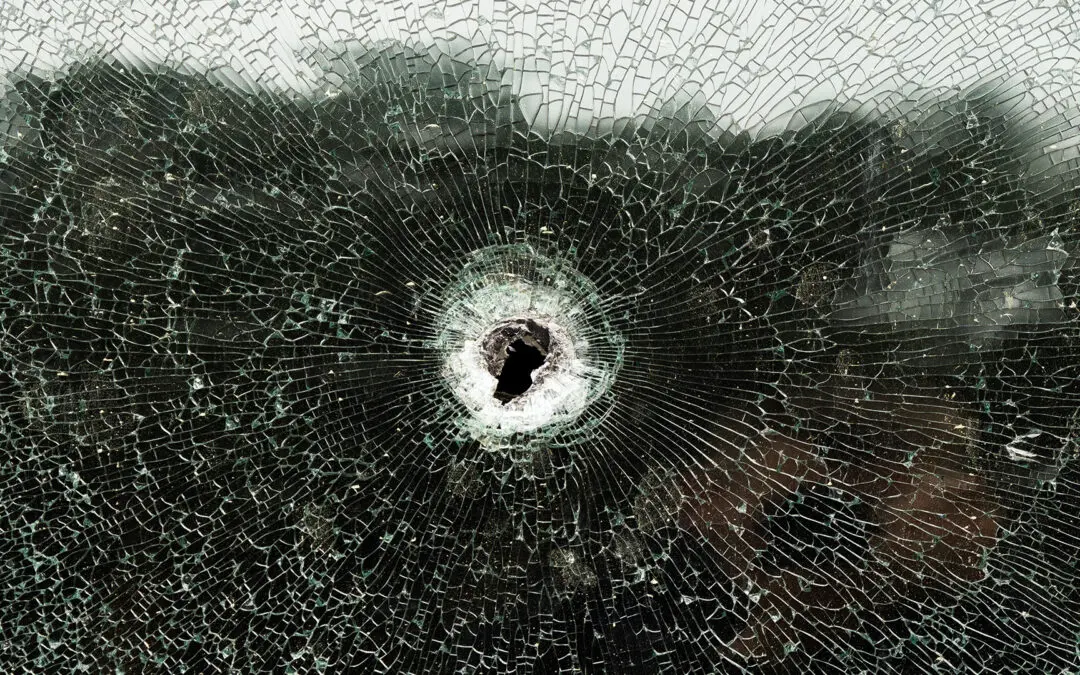
“Bulletproof glass” is one of those terms that sounds self-explanatory. A bullet hits it, and the glass stops it. The reality is a little more nuanced than that.
The more accurate term is bullet-resistant glass, because no glass system is completely impenetrable under every condition. What bullet-resistant glass actually does is use multiple transparent layers to absorb force, spread impact, and reduce penetration. It’s not regular glass made thicker; it’s a complete glazing system engineered to manage impact while still allowing visibility. That’s why you’ll find it in storefronts, schools, banks, and healthcare facilities anywhere visibility and a stronger barrier both matter.
Here’s a straightforward look at how it works.
How Bullet-Resistant Glass Actually Works
When something strikes standard glass, the force concentrates in one spot. That’s why regular glass cracks and shatters quickly under impact. Bullet-resistant glass works differently because it’s built in layers, and those layers are what make the difference.
The Outer Layer Takes the First Impact
The outside surface absorbs the initial force. It may crack or show visible damage, but that doesn’t mean the system has failed. The first layer’s job is to absorb and begin spreading impact energy, not to stop the projectile entirely on its own.
Force Spreads and Slows as It Moves Through the Layers
Instead of letting energy travel straight through in one concentrated path, the layered system redirects and dissipates that force. Materials like polycarbonate, which can flex more than glass, play a key role here. They help slow penetration in a way that rigid materials alone can’t. Think of it less like a solid wall and more like several layers working together, each one handling a different part of the job.
Bonded Interlayers Keep the System Together
The layers are bonded so they function as one unit. When the glass is damaged, those interlayers keep broken pieces in place rather than allowing the system to fall apart. That’s why bullet-resistant glass can look significantly damaged and still continue to provide resistance.
Why Bullet-Resistant Glass Can Crack Without Failing
This surprises a lot of people. Bullet-resistant glass can crack and still do its job.
With standard glass, cracking usually means the material has lost its structure. With bullet-resistant glazing, the layers and interlayers are designed to hold together after damage. Cracking is often part of how the system absorbs energy. What matters isn’t whether the glass looks intact; it’s whether the system continues to resist penetration and maintain separation between inside and outside.
What Materials Make Bullet-Resistant Glass Work?
Most bullet-resistant glass systems combine rigid and flexible transparent materials. The exact mix depends on the intended protection level, visibility needs, and where the glass will be installed.
| Part of the System | What It Helps Do |
| Glass layers | Absorb and spread initial impact |
| Polycarbonate | Help slow or reduce penetration |
| Acrylic | Add impact resistance with less weight in some systems |
| Bonded interlayers | Help hold damaged material together |
| Frame system | Helps support the glass under stress |
It’s worth noting that not all safety glass is bullet-resistant. Tempered glass is stronger than regular glass and breaks into smaller pieces, which reduces injury risk but doesn’t resist penetration. Laminated safety glass holds together better after breakage, but standard laminated glass isn’t designed for ballistic protection. Bullet-resistant glazing uses specific material combinations and layering to resist penetration under defined impact conditions, which puts it in a different category entirely.
Why the Full System Matters
The glass panel is only one part of what makes bullet-resistant glazing perform. The frame, anchoring, opening design, and installation all affect how the system holds up. A high-quality panel installed in a weak or mismatched frame may not perform the way you’d expect. The glass and frame need to be designed to work together.
That’s why the right questions aren’t just about glass thickness. They’re about the intended protection level, what materials are being used, the type of frame supporting the glass, where it’s being installed, and whether the surrounding structure is suited for the application. A storefront, school entrance, bank window, and office reception area may all need different glazing approaches.
Not Sure If It’s Right for Your Building?
Bullet-resistant glass isn’t the right fit for every building or every location within a building. Some properties may need it in specific areas only; others may benefit from different security glass options, window film, or stronger storefront systems. A professional evaluation helps you figure out what actually makes sense for your building before you commit to anything.
If you’re a business owner, property manager, or facility decision-maker in Columbia, Jefferson City, Lake of the Ozarks, or surrounding Mid-Missouri communities, Columbia Glass & Mirror can help you evaluate whether bullet-resistant glass systems are the right fit for your facility.
Contact Columbia Glass & Mirror at (573) 874-6985 to schedule a consultation.
Frequently Asked Questions
How does bullet-resistant glass work?
Bullet-resistant glass works by using multiple layers to absorb force, spread impact, slow penetration, and hold damaged material together. The full system is designed to manage impact energy rather than remain perfectly undamaged.
Does bullet-resistant glass actually work?
Yes, when it’s properly selected, framed, and installed for the intended application. Performance depends on the glass system, frame, protection level, and the nature of the impact.
Is bullet-resistant glass completely impenetrable?
No, which is why “bulletproof” is a misleading term. The level of protection depends on the materials, construction, frame, installation, and the protection level the system was designed for. No transparent glass system is completely impenetrable under every condition.
Can bullet-resistant glass crack?
It can crack or show visible damage. That doesn’t mean it has failed. In most systems, cracking is part of how the glass absorbs force while the layers help maintain a barrier.
Can bullet-resistant glass fail?
Yes, if the impact exceeds the system’s intended protection level or if the glass, frame, or installation isn’t suited for the application. That’s why evaluating the full glazing system matters, not just the glass panel itself.
How long does bullet-resistant glass last?
Lifespan depends on the material, installation, exposure, maintenance, and building conditions. Like other commercial glazing, it should be inspected periodically for damage, seal issues, clouding, or changes in security needs.
-
How To Decide Between a Framed or Frameless Mirror
Are framed or unframed mirrors best for your home? Learn about the key differences between these ...
-
Six Signs Your Windows Need Replacement
Discover the top signs you need window replacement with expert tips from Columbia Glass & Mirror,...
-
What’s the Difference Between Tempered and Laminated Glass?
Learn about the laminated glass vs tempered glass differences with Columbia Glass & Mirror, your ...
-
8 Stunning Custom Glass Applications for Homes & Businesses
Explore 8 stunning custom glass applications for homes and businesses—from frameless showers to m...
-
Does Window Film Keep Cold Out? Act Before Winter Hits
Does window film keep cold out? Discover how it insulates your home, saves energy, and why Columb...